Assembly of Arundinella anomala genome to facilitate functional and developmental characterization of C4 distinctive cells
On January 9, 2026, Nature Plants published online a research paper titled "Assembly of Arundinella anomala genome to facilitate single-cell resolved functional and developmental characterization of C4 distinctive cells," jointly completed by the research groups led by WANG Peng and by HAN Bin from the Center for Excellence in Molecular Plant Sciences, Chinese Academy of Sciences. The study accomplished whole-genome sequencing, assembly, and annotation of the C4 grass Arundinella anomala. By integrating single-cell analysis, the research revealed the functional properties and molecular characteristics of its distinctive C4 cells (DC cells), which exhibit a Kranz-like arrangement, and explored the mechanisms underlying their independent development and alternate organization.
Owing to specialized leaf structures and CO₂ concentration mechanisms, C4 plants have developed a highly efficient photosynthetic system. In the leaves of the typical C4 plant maize, each vascular bundle (vein, V) is surrounded by a layer of chloroplast-rich bundle sheath (BS) cells, with two mesophyll (M) cells separating adjacent vascular bundles, forming a continuously dense pattern of V-BS-M-M-BS-V-BS-M-M-BS-V (Kranz leaf anatomy). In contrast, C3 plants such as rice have multiple mesophyll cells (up to eight or more) between vascular bundles (V-BS-M-M-M-M-M-M-M-M-BS-V). Maize BS cells and M cells contain functionally differentiated chloroplasts and cell-specific metabolic enzymes, enabling each pair of BS and M cells to function as a basic unit for C4 photosynthesis. Therefore, understanding the formation mechanism of C4-type BS cells is considered the cornerstone for constructing the C4 pathway.
Featuring a "Kranz-type leaf anatomy" with densely and continuously arranged veins, maize leaves exhibit highly optimized C4 photosynthetic efficiency. However, beyond the functional coordination between BS cells and M cells, the precise arrangement of the vascular system presents additional challenges for genetic engineering. The C4 grass Arundinella anomala has attracted the research team's attention due to its unique leaf structure: unlike maize, its leaves lack small intermediate veins; instead, specialized cells termed "distinctive cells" (DC cells), which resemble BS cells in morphology and function, are distributed between large veins and separated by M cells. These DC cells and their chloroplasts also exhibit structural and metabolic specializations and collaborate with adjacent M cells to perform C4 photosynthesis. However, their development and arrangement are independent of the vascular bundles. Thus, the leaf structure of Arundinella anomala represents a simplified yet efficient "Kranz-like" C4 configuration (V-BS-M-DC-M-DC-M-DC-M-BS-V).
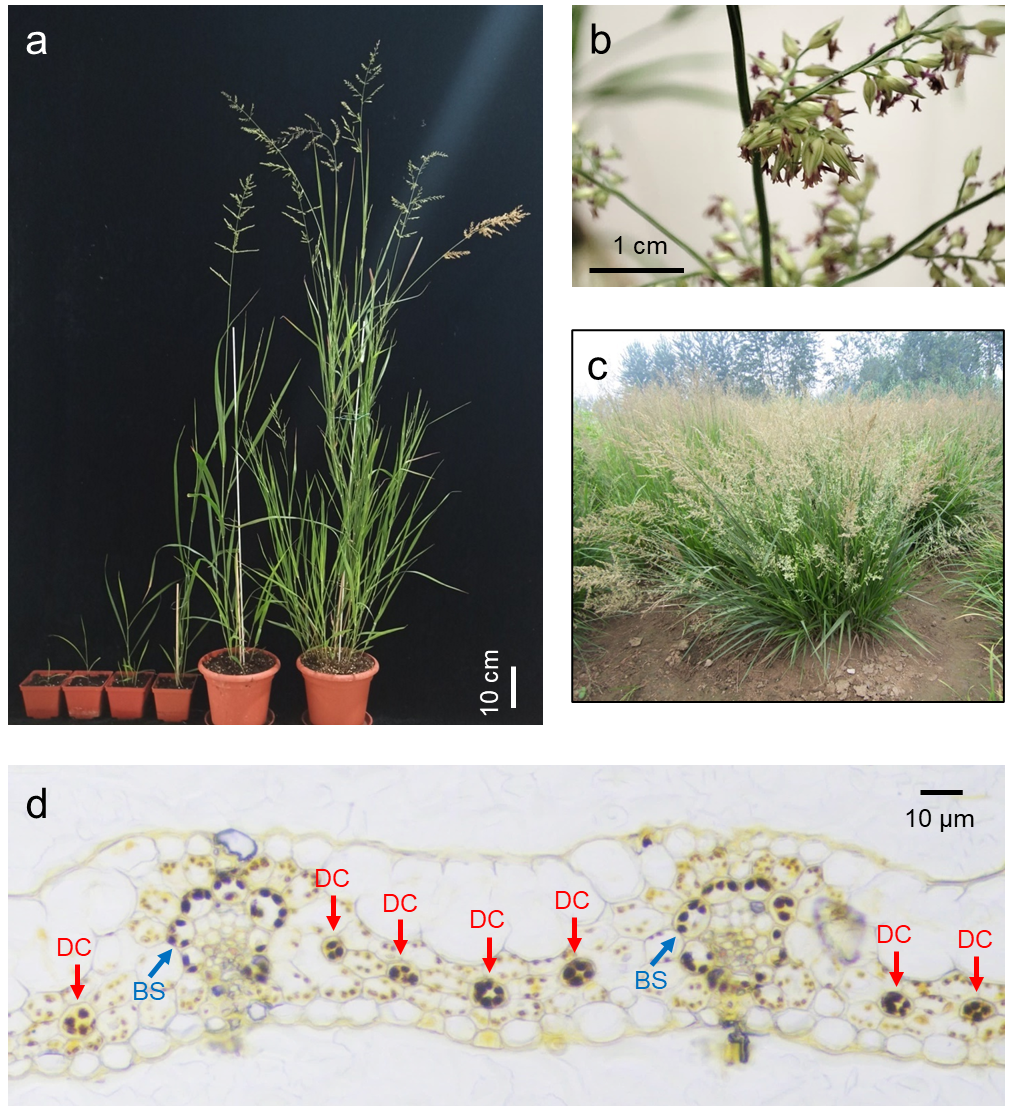
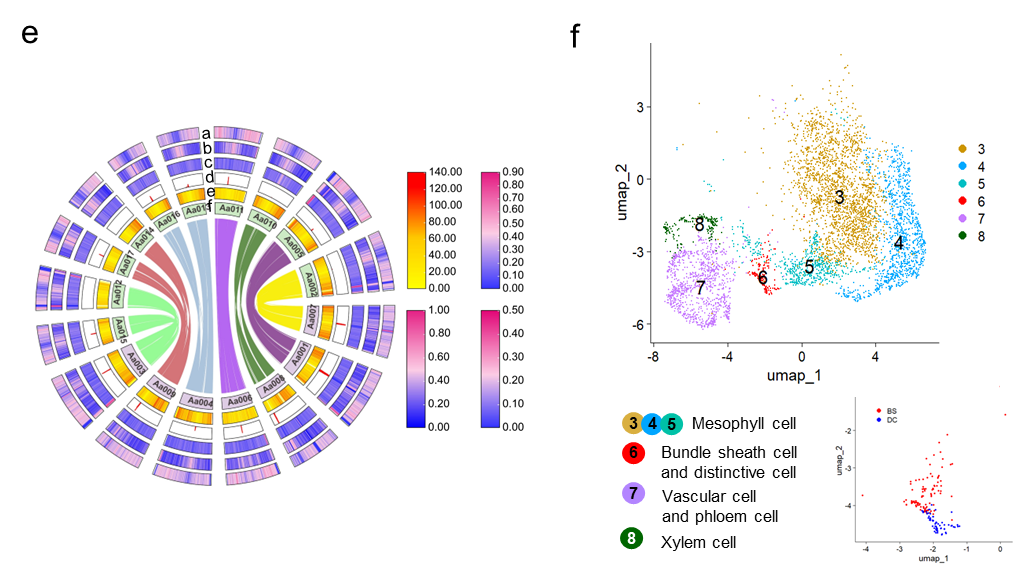
Figure 1 Leaf structure, genome, and single-cell clustering atlas of Arundinella anomala
a. Appearance of Arundinella anomala at different growth stages potted in the phytotron; b. Inflorescence during flowering; c. Field-cultivated Arundinella anomala; d. Cross-section of a mature Arundinella anomala leaf; e. Circos plot of the assembled Arundinella anomala genome; f. Construction of the single-cell gene expression atlas of Arundinella anomala leaves.
To utilize the unique C4 leaf structure of Arundinella anomala to investigate the independent developmental mechanisms and functional characteristics of DC cells, the research team accomplished a high-quality chromosome-level genome assembly, annotation, and phylogenetic analysis. They constructed a reference genome of approximately 2.02 Gb, annotating a total of 78,966 high-quality genes. The study also elucidated its allopolyploid structure, composed of two distinct subgenomes, along with the evolutionary history of chromosome fusion. The high-quality reference genome laid a solid foundation for single-cell transcriptomics and developmental regulation research. Subsequent findings include: (1) Systematic analysis of the similarities and differences between BS cells and DC cells using single-cell transcriptomics and laser microdissection sequencing techniques; (2) Investigation of the preferential gene expression characteristics, in situ metabolic features, and proliferation patterns of DC cells; (3) Discovery that DC cells exhibit upregulation of carbon fixation enzymes, starch metabolism, and cyclic electron transport pathways compared to BS cells, while avoiding redox imbalance through coordinated regulatory mechanisms. These findings highlight the uniqueness of the independent arrangement of DC cells—each DC cell is longitudinally surrounded by mesophyll cells, significantly increasing the exchange pressure of C4 intermediates.
Equally important, the leaf structure featuring DC cells in Arundinella anomala holds potential as a novel solution for the genetic engineering of C4-type leaf architecture. This study offers exciting insights: (1) Mechanisms involving the SHORT-ROOT (SHR) gene and auxin signaling pathways can trigger the proliferation of DC cells; (2) Modulating the expression level of the SHR1 gene in rice leaves can achieve an alternating distribution of "BS-like cells," resembling the arrangement pattern of DC cells in Arundinella anomala leaves. Thus, this research reveals molecular characteristics and the plasticity in the arrangement of DC cells in Arundinella anomala leaves. These findings may serve as an alternative research platform for exploring the regulatory mechanisms of C4 leaf structure, laying the groundwork for introducing functional "BS-like cells" into the mesophyll cells between veins of C3 grasses, which offers a unique opportunity and strategy for introducing C4 traits into C3 crops.
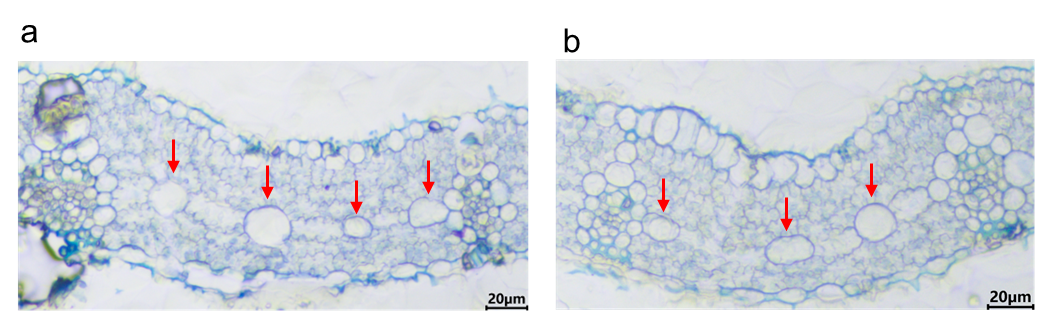
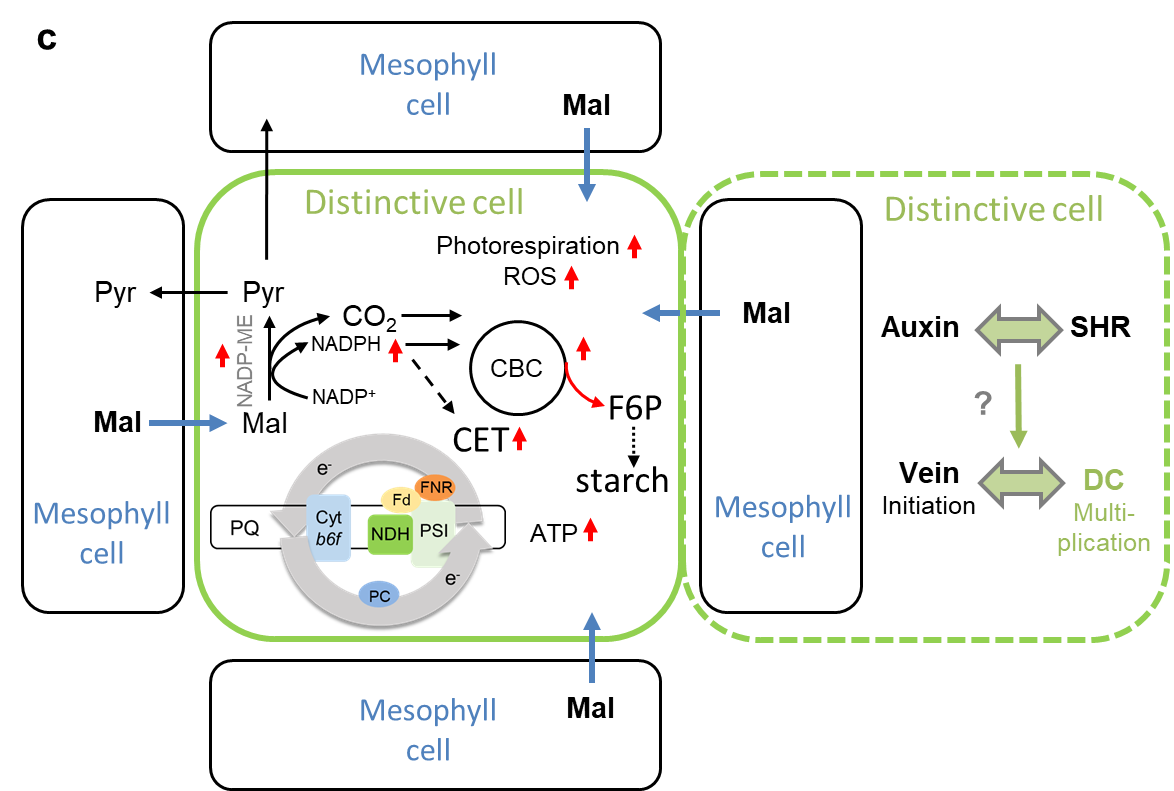
Figure 2 The induction of "BS-like cell" phenotype and schematic diagram of physiological and developmental regulation of DC cells
a-b. Cross-sectional views demonstrate that modulating the expression level of SHR1 gene in rice leaves can induce an alternating distribution of "BS-like cells" (indicated by red arrows); c. Schematic diagram illustrating the physiological characteristics of DC in Arundinella anomala leaves and the hypothesized developmental regulatory mechanisms.
Ph.D. candidate SU Hong, Dr. LI Yan, and Ph.D. candidate CHEN Yonghe from the Center for Excellence in Molecular Plant Sciences, Chinese Academy of Sciences, are the co-first authors of this paper. Prof. WANG Peng and Prof. ZHAO Qiang are the co-corresponding authors. Prof. HAN Bin provided guidance for the genomic work. ZHANG Rui, Dr. LU Hengyun, and Prof. DONG Wentao participated in this research. Prof. Dong’s earlier study provided important inspiration for the regulation of SHR1 in achieving the alternating distribution of “BS-like cells” in this work. The authors extend their gratitude to Prof. WU Juying from the Beijing Academy of Agriculture and Forestry Sciences for providing the Arundinella anomala materials. This research was supported by the Biological Breeding-National Science and Technology Major Project and by the Key Laboratory of Plant Carbon Capture, Chinese Academy of Sciences.
Article Link: https://www.nature.com/articles/s41477-025-02183-7
Contact: wangpeng@cemps.ac.cn

Copyright @copy 2002-
CAS Center for Excellence in Molecular Plant Sciences / Institute of Plant Physiology and Ecology
All rights reserved
Address: 300 Feng Lin Road, Shanghai 200032, China
Tel: 86-21-54924000
Fax: 86-21-54924015
Email: webmaster@sippe.ac.cn