Scientists Identify a Key Gene for High Protein Content in Maize
On June 3 2026, Nature published online a research paper titled “Teosinte alleles enhance nitrogen assimilation and seed protein in maize,” jointly completed by the research groups led by WU Yongrui, WANG Haihai from the Center for Excellence in Molecular Plant Sciences (CEMPS), Chinese Academy of Sciences (CAS), in collaboration with WANG Wenqin's team from Shanghai Normal University and Yongcai Huang's team from Sichuan Agricultural University.
The research teams have successfully cloned THP3-T (Teosinte high protein 3), a key gene from maize's wild ancestor, teosinte, that significantly enhances seed protein content. This discovery marks another major breakthrough following their 2022 identification of the first high-protein gene, THP9-T.
Maize (Zea mays L.) is a cornerstone of global food security. However, modern maize varieties often suffer from low seed protein content, leading to a heavy reliance on imported soybean meal for livestock feed. During the 9,000-year history of maize domestication and modern breeding, the lack of directional selection for protein content resulted in the "loss" of many beneficial alleles.
The researchers found that THP3-T encodes glutamate-oxaloacetate transaminase 1 (GOT1), a central enzyme in the nitrogen assimilation pathway. Natural variations in the promoter and coding sequence of THP3-T boost both its expression and enzymatic activity, optimizing nitrogen partitioning toward protein synthesis. Notably, THP3-T was inadvertently disfavored during domestication, with its frequency in modern maize lines dropping to only 2.1%.
The study further demonstrates a powerful synergistic effect when THP3-T is pyramided with THP9-T (which encodes asparagine synthase 4). By introgressing both superior alleles into Zhengdan958, a widely cultivated elite maize hybrid in China, the researchers achieved a significant increase in seed protein content-from 8.5% to 12–13%-and whole-plant protein content from 7% to over 9%, all without compromising grain yield.
“This research not only reveals the molecular mechanism behind the decline in maize protein content during domestication but also provides a genetic strategy to break the long-standing yield-protein trade-off,” said the researchers. By reintroducing these beneficial rare alleles from wild relatives, the team has developed a powerful genetic tool for breeding high-protein maize varieties, offering a promising path to address global food and feed demands.
The study was led by Prof. WU Yongrui, Prof. WANG Haihai, and Prof. WANG Wenqin, who served as co-corresponding authors. HUANG Yongcai, ZHU Yidong, and Cui Yahui are the co-first authors of the study. The research was supported by the Strategic Priority Research Program of the Chinese Academy of Sciences, the National Natural Science Foundation of China, and other funding agencies.
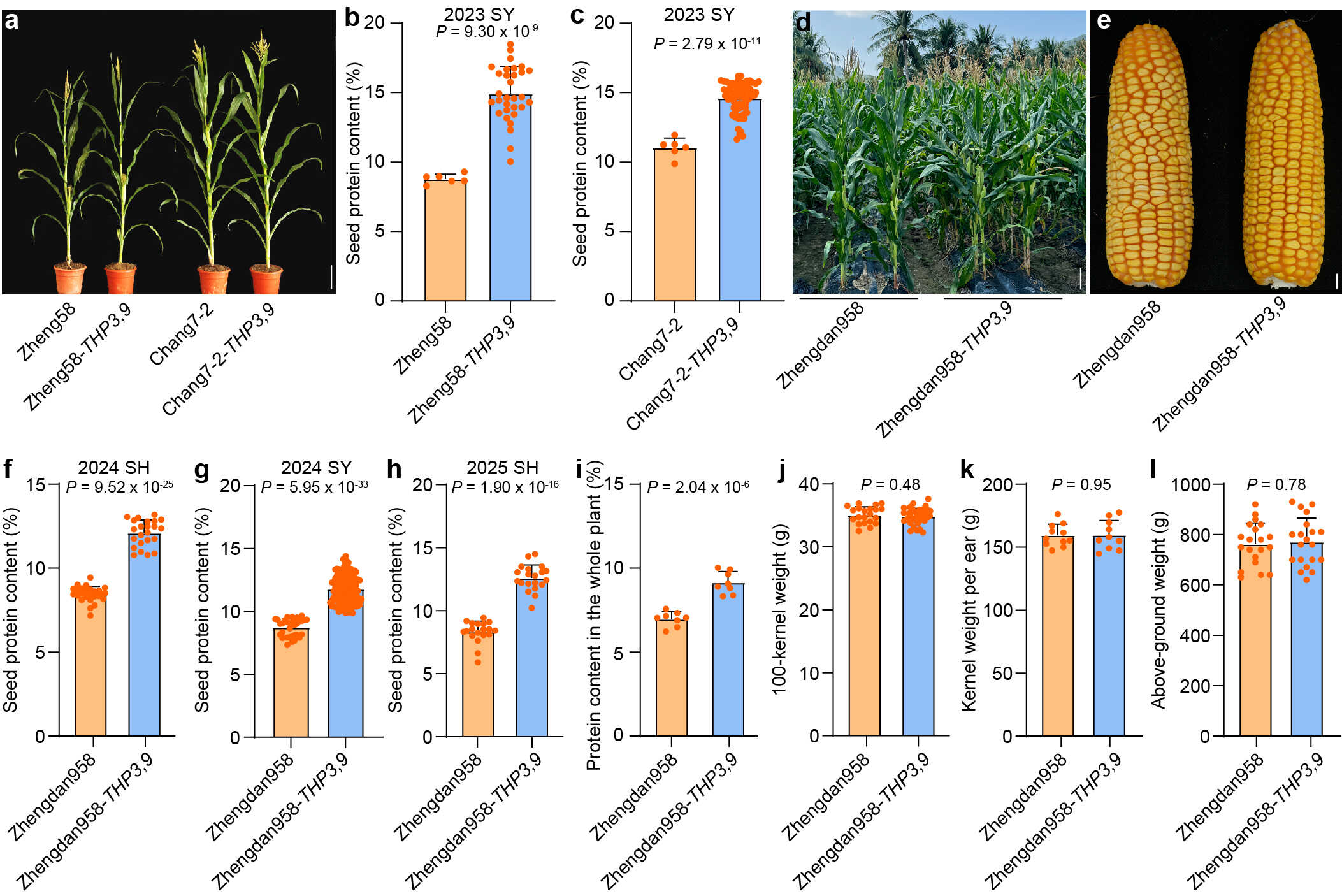
Fig. 1 | Pyramiding of THP3 and THP9 for high-protein maize development.
THP3 and THP9 increase the seed protein content of the hybrid Zhengdan958 from 8.5% to 12–13% and the whole-plant protein content from 7% to over 9%, without compromising grain yield.

Copyright @copy 2002-
CAS Center for Excellence in Molecular Plant Sciences / Institute of Plant Physiology and Ecology
All rights reserved
Address: 300 Feng Lin Road, Shanghai 200032, China
Tel: 86-21-54924000
Fax: 86-21-54924015
Email: webmaster@sippe.ac.cn